
Keeping your home cool and comfortable, especially during sweltering summers, depends largely on the type of refrigerant your air conditioner uses. However, understanding which refrigerant is in your system or learning about alternatives for an upgrade can feel overwhelming.
The truth is, the way your air conditioner works is changing rapidly due to new environmental regulations, meaning the old coolants are being phased out. Understanding the various AC refrigerant types now available is critical. We know you don’t want to be caught off guard by complicated rules or surprise repair costs!
In this article, we break down these shifts into simple, clear steps, showing you what the new rules mean for your equipment and helping you choose the right AC refrigerant types for a cost-effective solution to keep your home perfectly cool for years to come.
This guide breaks down AC refrigerant types, including their functions, types, environmental impacts, and tips for choosing the right one for your needs. Here’s what you’ll learn:
- What are AC refrigerants, and how do they work?
- Different types of AC refrigerants through the years
- Which refrigerant is the best choice for your home?
What Are AC Refrigerants and How Do They Work?
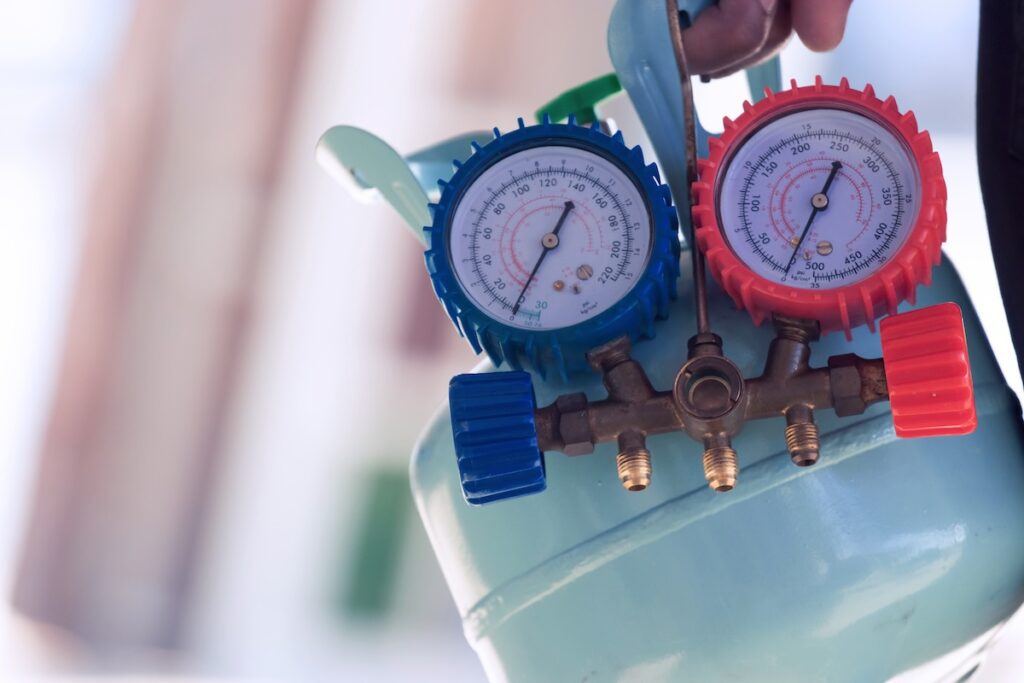
AC refrigerants are the lifeblood of your cooling system. These chemical compounds are designed to absorb heat from indoor air and release it outside, keeping your home cool and comfortable. Refrigerants move through your air conditioning system in a continuous cycle of compression and evaporation, transforming from a liquid to a gas and back again.
Without refrigerant, your AC system simply cannot function. Each one of the different AC refrigerant types impacts the system efficiency, longevity, and environmental footprint.
Here are some key points about AC refrigerant types:
- They are essential for the cooling process in your AC system.
- They impact your system’s energy efficiency and performance.
- Different types of refrigerants have varying effects on the environment.
- Choosing the right option among the various AC refrigerant types can extend your AC’s lifespan.
Ultimately, the best way to maintain these critical refrigerant levels and ensure the longevity of your entire system is through consistent, preventative maintenance. Professional HVAC keep-up addresses everything from potential leaks to coil efficiency, which is especially important given the ongoing regulatory changes affecting all AC refrigerant types. To learn exactly what steps a technician performs and why this annual service is crucial for peak performance, explore the benefits of an AC tune-up.
4 Different AC Refrigerant Types Through the Years
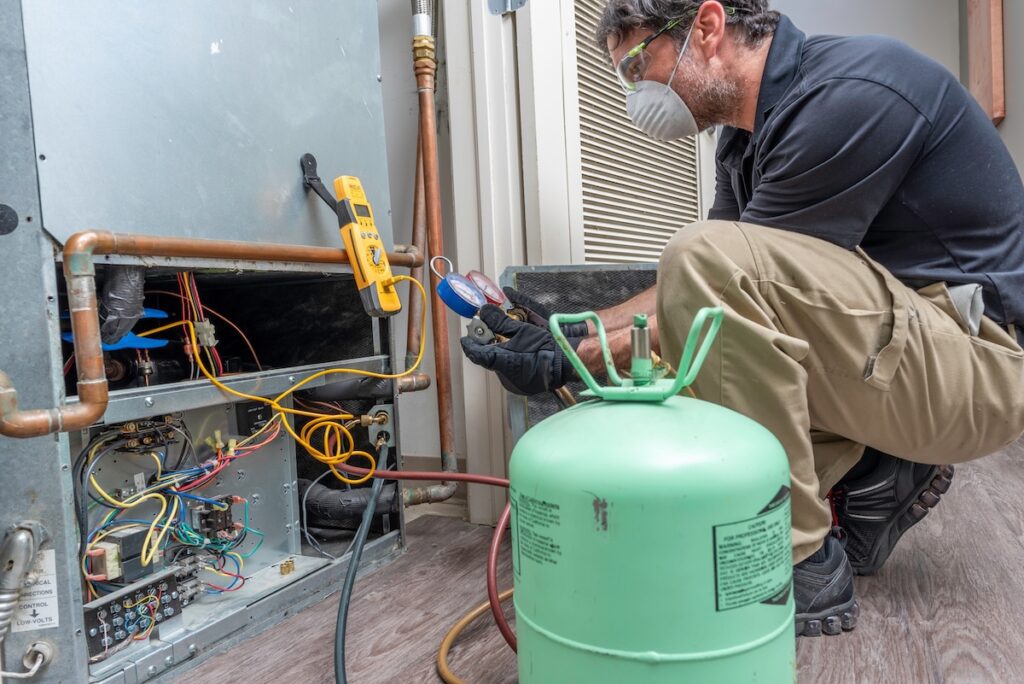
Refrigerants have come a long way since air conditioners were first introduced. Let’s take a closer look at four primary AC refrigerant types that have paved the way for cooling technology.
1. R-22 (Freon)
R-22, commonly known as Freon, was historically one of the most widely used AC refrigerant types in household air conditioning systems. Its reliability and familiarity made it a go-to choice for homeowners and technicians for decades. However, significant environmental concerns have surrounded R-22 due to its high ozone depletion potential (ODP). As a result, the EPA phased out its production and importation in 2020 under the Clean Air Act, making it less accessible and unsustainable for long-term use.
2. R-134a
R-134a is a refrigerant that gained widespread use in vehicle cooling systems but was also applied in specific air conditioning systems. It was initially seen as a more environmentally friendly alternative due to its lower ozone depletion potential compared to older refrigerants. During its peak usage, R-134a was readily available and supported various cooling systems effectively. However, with growing environmental concerns, R-134a—along with many other AC refrigerant types—is now being phased down in favor of newer, more eco-friendly refrigerants that comply with updated environmental regulations.
3. R-410A (Puron)
R-410A, also marketed as Puron, was introduced as a direct replacement for R-22 and quickly became the standard refrigerant for modern air conditioning systems. It features zero ozone depletion potential, making it a more environmentally conscious choice compared to its predecessors. Additionally, R-410A allows AC units to operate more efficiently, offering better performance and energy savings.
It is widely available for both installation and maintenance, which adds to its popularity. However, despite its benefits, R-410A still contributes to global warming through greenhouse gas emissions, highlighting the ongoing search across all AC refrigerant types for even more sustainable alternatives.
4. R-32
R-32 is a next-generation refrigerant that has been gaining traction as an upgrade-focused option due to its higher energy efficiency and lower environmental impact. Compared to R-410A, R-32 has a significantly reduced global warming potential (GWP), making it a more sustainable choice for the future. Its energy efficiency means it requires less refrigerant to operate effectively, further contributing to its eco-friendly profile.
However, one downside of R-32, shared by many newer AC refrigerant types, is its limited compatibility with older air conditioning systems, which may require upgrades or replacements to accommodate this newer refrigerant. Despite this limitation, R-32 is rapidly becoming a preferred choice in modern cooling technology.
Which of the AC Refrigerant Types is Best for You?

The best choice among AC refrigerant types for your air conditioner will depend on several factors, including your system’s age, your budget, and environmental considerations.
Is Your System Older Than 2010?
If your air conditioning system was manufactured before 2010, it’s likely using R-22 refrigerant, a chemical that has been phased out due to its harmful impact on the ozone layer. Because R-22 is no longer produced or imported, the cost of replacing or recharging it has skyrocketed, making maintenance for older systems increasingly expensive and unsustainable. Continuing to rely on a system that uses R-22 can result in more frequent breakdowns and higher repair costs over time.
Upgrading to a more modern air conditioning unit that uses eco-friendly refrigerants like R-410A or R-32 is a smarter, more sustainable choice. These newer AC refrigerant types are not only better for the environment but also more efficient, meaning your system will perform better while reducing its carbon footprint. By upgrading now, you’re making a proactive investment in a reliable, cost-effective cooling solution for years to come.
Replacing Your AC Unit? Choose the Right Refrigerant
Are you in the market for a new air conditioning unit? One of the most important considerations during your search is the type of refrigerant the system uses. Many older systems relied on R-22 refrigerant, which is both environmentally harmful and costly to maintain. Today, modern systems use refrigerants like R-410A or R-32, both of which are far better for the environment and comply with current regulatory standards.
These AC refrigerant types are designed to improve energy efficiency, allowing your cooling system to run smoothly and consume less energy. This means lower electricity bills and a more reliable cooling performance, especially during those hot summer months. Choosing a unit with an eco-friendly refrigerant also ensures your system is future-proof and aligned with the latest environmental initiatives. By prioritizing the right refrigerant, you’re making a choice that benefits your home, your wallet, and the planet.
Focus on Energy Efficiency Standards
When upgrading or replacing your air conditioning unit, it’s critical to focus on energy efficiency. Modern systems with high energy efficiency ratings are not only better for the environment but also significantly reduce your monthly energy costs. Look for models that feature eco-friendly refrigerants like R-410A or R-32, which are designed to work seamlessly with advanced energy-saving technologies. These systems generate less waste, use less electricity, and produce fewer greenhouse gas emissions, making them a responsible choice for environmentally conscious homeowners.
Additionally, high-efficiency models often include features such as programmable thermostats and variable-speed compressors, which further enhance performance and energy savings. Investing in an energy-efficient system may have a slightly higher upfront cost, but the long-term savings on energy bills and the reduced need for repairs make it a cost-effective and sustainable choice. By choosing a system that prioritizes efficiency, you’re doing your part to reduce your carbon footprint while enjoying consistent, high-performance cooling.
This decision is crucial because the refrigerant must be compatible with the system’s core components. To ensure that your entire cooling investment—from the refrigerant to the unit’s mechanicals—is top-tier and provides reliable performance, you should also be familiar with the best AC unit brands on the market.
Tune-Up vs. Complete Replacement for New Refrigerants
When servicing an older unit that relies on phased-out refrigerants, you face a critical choice that hinges entirely on your system’s age and repair needs.
- Tune-Up (Temporary): A simple repair using existing or reclaimed coolant is a budget-friendly fix for minor issues, but it only delays the inevitable need for a system upgrade.
- Complete Replacement (Long-Term): If your unit is over 10–15 years old or requires a major repair, replacement is the smarter investment. Newer systems use current, eco-friendly coolants and offer superior efficiency. To ensure your investment is top-tier and reliable, be familiar with the best AC unit brands on the market.
Refrigerant Guide
Choosing the right refrigerant is essential for keeping your air conditioning system efficient, environmentally friendly, and safe. At Palmetto Air Conditioning, our team of licensed HVAC professionals has the experience and expertise to help you make informed decisions about your AC system. Whether you need assistance with refrigerant upgrades, routine maintenance, or repairs, we’re here to provide reliable, friendly service tailored to your needs.
Whether you need assistance with refrigerant upgrades, routine maintenance, or repairs, we’re here to provide reliable, friendly service tailored to your needs. When your system fails completely, quick action is non-negotiable, and for those unexpected breakdowns, you need reliable emergency AC repair.
Trust us to keep your home cool and comfortable all year round. Contact Palmetto Air Conditioning today to schedule your service or consultation—we’re just a call away from ensuring your home stays perfectly climate-controlled!
