
While it may not be the first project that comes to mind, keeping your AC unit in great shape is a critical task that prevents costly repairs and lowers your energy bills. Neglecting this maintenance can lead to poor indoor air quality and strain your system, which is why learning how to clean AC filter components is essential for every homeowner.
Fortunately, this is a simple DIY job that you are fully capable of handling. In this guide, you’ll learn everything you need to know about how to clean AC filter screens and mesh, ensuring your air conditioner runs efficiently and keeps your home comfortable. By following these steps on how to clean AC filter dust and debris, you will extend the lifespan of your unit and breathe easier all year round.
Key Takeaways
- Safety & Preparation: The process requires turning off the air conditioner at the power switch or circuit breaker before starting to prevent electrical accidents.
- The 8-Step Process: The cleaning guide involves: gathering supplies, turning off power, removing the filter, washing, disinfecting (with a vinegar solution), and thoroughly drying the filter. Mastering this sequence is key to successfully completing the task of how to clean AC filter.
- Disinfecting: After washing, disinfect the AC filter by soaking it in a solution of equal parts water and white vinegar to help kill bacteria and mold.
- Drying Protocol: The filter must be air-dried completely before reinstallation to prevent mold growth inside the air conditioner.
- Frequency: For maximum performance, regularly check the filter and confirm the correct schedule in your air conditioner’s user manual.
- Full System Care: Cleaning the filter is only one part of maintenance; for maximum efficiency, knowing how to clean AC filter for the entire unit is also important.
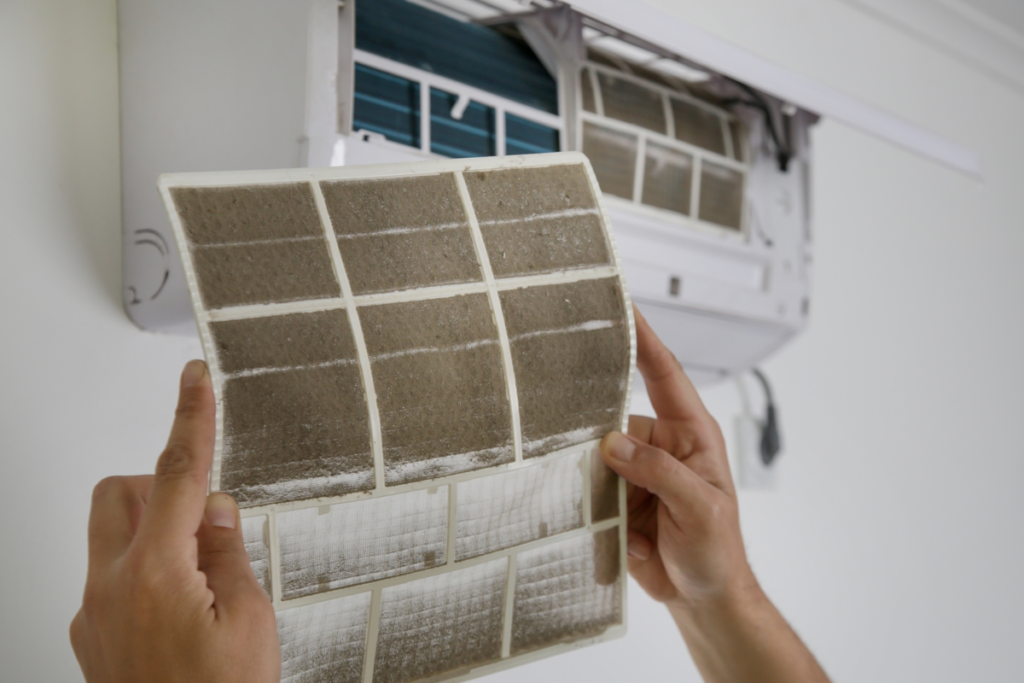
How To Clean AC Filter in 8 Steps
1. Gather Your Supplies
Before you start the cleaning process, gather all the necessary supplies. This will make the task smoother and more efficient, especially when you are learning how to clean AC filter effectively for the first time.
First, you’ll need a vacuum cleaner with a hose attachment. This is essential for removing dust and debris from the filter. Next, have a bucket of warm water mixed with a few drops of mild detergent ready. This solution will help you clean the filter thoroughly. Lastly, have a soft brush or sponge on hand for scrubbing, and a towel for drying.
2. Turn Off the Air Conditioner
Safety should always come first. Before you begin cleaning the air filter, make sure to turn off your air conditioner.
Locate the power switch or circuit breaker for your air conditioning unit. Switch it off to prevent any electrical accidents or damage to the unit while you’re working. This critical safety step must be performed anytime you are preparing to work on the unit, particularly when learning how to clean AC filter components. If you’re unsure where the power switch is, refer to your air conditioner’s user manual for guidance.
With the power turned off, you can now safely proceed to remove the filter without the risk of electrocution or damaging the internal components of your air conditioner.
Believe it or not, we, as HVAC professionals, have this simple but important step always in mind. This way, we guarantee our safety while also providing excellent work.
3. Remove the AC Filter
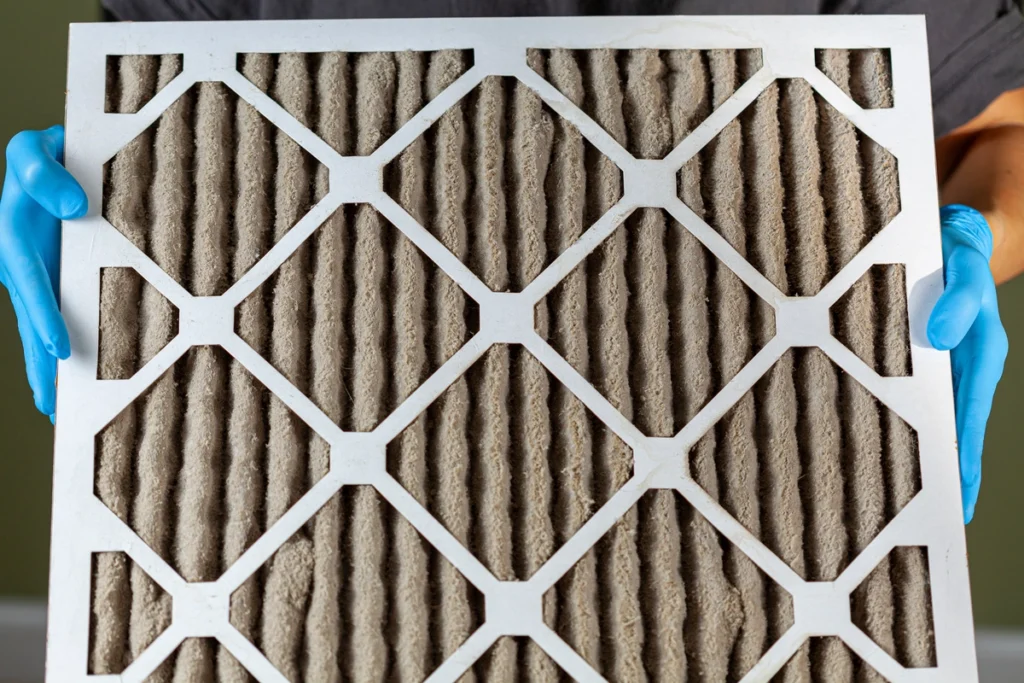
Most air conditioners have a front panel or grille that you need to open to access the filter. Check if your unit has clips, screws, or a sliding mechanism holding the panel in place. Gently open the panel and locate the filter. Carefully slide or lift the filter out of the air conditioner, being cautious not to damage it. This step is essential in understanding how to clean AC filter models correctly.
This routine access should be performed frequently; to maximize your unit’s performance and ensure you are changing your filter on time, confirm the correct schedule in our guide on how often to change air filter. If you’re unsure how to remove the filter, consult the user manual for specific instructions related to your air conditioner model. You should also be able to find a digital copy of the manual online if you don’t have a physical copy.
4. Vacuum the Filter
With the AC filter removed, start by vacuuming it to remove loose dust and debris. Using the hose attachment on your vacuum cleaner, gently run it over the surface of the filter. Make sure to cover both sides to ensure you remove as much dust as possible.
If you don’t have a vacuum cleaner or aren’t confident that you’ll be able to use it without damaging your AC filter, you can also use a soft-bristled brush or cloth to gently wipe off any dust from the filter.
This step is crucial during the process of “How to clean AC filter”, as it helps prevent the filter from becoming clogged, which can reduce the efficiency of your air conditioner. Take your time with this step to ensure you remove all loose particles.
5. Wash the Filter
Submerge the filter in the bucket of warm water mixed with mild detergent. Allow it to soak for about 10-15 minutes. This will help loosen any stubborn dirt stuck to the filter. After soaking, use a soft brush or sponge to gently scrub the filter, paying attention to any particularly dirty areas.
Be careful not to use excessive force, as this could damage the filter. Once you’re satisfied that the filter is clean, rinse it thoroughly with clean water to remove any soap residue. Remember, achieving this spotless result is the final step in the full routine of how to clean AC filter without compromising your unit’s performance.
6. Disinfect the Filter
To ensure your AC filter is thoroughly clean, disinfect it using a vinegar solution.
Create a mixture of equal parts water and white vinegar. Vinegar is an effective natural disinfectant that can help kill bacteria and mold that may be lurking in the filter. Submerge the filter in this solution and allow it to soak for another 15-20 minutes.
After soaking, rinse the filter thoroughly with clean water to remove any remaining vinegar. This step of the “how to clean AC filter” process ensures that your filter is not only clean but also free from harmful microorganisms.
7. Dry the Filter
Properly drying the filter is essential before reinstalling it in your air conditioner.
Place the filter on a clean, dry towel and pat it gently to remove excess water. Allow the filter to air dry completely before reinstallation. This could take several hours, so it’s best to plan this task when you don’t need to use your air conditioner immediately.
Ensuring the filter is completely dry will prevent mold growth and maintain the efficiency of your air conditioner.
8. Reinstall the Filter
With your clean and dry filter, it’s time to reinstall it in your air conditioner.
Carefully slide or place the filter back into its original position within the air conditioner. Ensure it fits snugly and securely. Close the front panel or grille and secure it with any clips or screws you removed earlier.
Once the filter is properly reinstalled, turn the power back on to your air conditioner. Your AC is now ready to use. This successful maintenance ensures your unit runs more efficiently and provides cleaner air—the direct and satisfying result of mastering how to clean AC filter effectively.
Frequency of Cleaning
Determining the right maintenance schedule is a crucial part of learning how to clean AC filter components effectively. While a “set it and forget it” approach is common, sticking to a routine ensures peak energy efficiency and consistent air quality.
- General Rule of Thumb: For average residential use, it is best to check your filter once a month. If the filter looks gray or dusty, clean it immediately. For vacation homes or units used only occasionally, checking every 3 months is usually sufficient.
- High-Usage Scenarios (Every 2 Weeks): You should increase your cleaning frequency if:
- You have pets (dog or cat hair clogs filters rapidly).
- You suffer from allergies or respiratory issues.
- You live in a particularly dusty or windy area.
- The AC unit runs constantly during heatwaves or peak summer months.
- Seasonal Maintenance: Regardless of your regular schedule, always perform a deep clean at the start of the cooling season (spring) and at the end of the season (autumn).
- Visual Check: A simple way to test if your filter needs maintenance is the “light test.” Hold the filter up to a light source; if you cannot see light passing through the mesh or fabric, you need to review the steps on how to clean AC filter screens and wash them immediately.
The Full System Clean: Filter vs. Unit
While learning how to clean AC filter is a vital, simple maintenance task, it only addresses one small component of your cooling system. For maximum efficiency and longevity, it is equally important to clean both the air filter and the entire AC unit, including the internal evaporator coils and the external condenser.
When grime builds up on the coils, it drastically reduces the system’s ability to transfer heat, forcing it to work harder and increasing your energy bills. A true system clean addresses this heat transfer deficiency by targeting the dirt on all major components. To learn the full process for comprehensive sanitation and maintenance, including the essential outdoor components, find out how to clean AC unit.
Prioritize Your Indoor Air Quality
Cleaning your AC filter regularly is a simple yet crucial task that will guarantee your home has great air quality. Especially when it’s done by the experienced hands of HVAC contractors who can improve the efficiency of your air conditioner.
By understanding how to clean AC filter components successfully, you can confidently maintain your system and enjoy the benefits of a well-maintained air conditioning system. However, if your system still struggles after a filter change, you’ll need other maintenance or repair services; a complete failure to cool, or AC not blowing cold air, is a major sign that requires immediate professional service.
Remember, if you need professional assistance or have any concerns about your HVAC system, don’t hesitate to contact Palmetto Heating & Air. Our team of experts is ready to help with all your HVAC repair needs. Keep your home comfortable and your air conditioner running smoothly by knowing how to clean AC filter thoroughly, one of the most important regular maintenance tasks.
